

Every conversation about AI on a forwarder’s commercial desk arrives, sooner or later, at the same arithmetic. If a quote that took 20 minutes now takes 2, and a tender response that took a week now takes an afternoon, the same book of business needs a fraction of the hours. The arithmetic assumes the book stays the same size. That assumption has a poor record whenever something a business used to ration suddenly gets cheap. The failure pattern has a name, and freight ran the definitive version of the experiment on itself in the 1960s. This guide sets out the original argument, the evidence from freight, computing and current AI adoption, and what it means for a desk planning capacity, staffing and service.
Efficiency raises consumption when demand has room to grow
William Stanley Jevons published The Coal Question in 1865, a study of how long Britain’s coal could last. The comfortable assumption of his day was that more efficient steam engines would stretch the reserves by burning less. Jevons read the history of the engine and found the record showed the opposite. Each generation of engine did the same work on less coal. Each was followed by more coal burned in total, because cheaper motive power kept finding new work worth doing. James Watt’s engine needed a fraction of the fuel of the Newcomen engine it replaced, and it was Watt’s engine that put steam into mills, mines, railways and ships. “It is wholly a confusion of ideas to suppose that the economical use of fuel is equivalent to a diminished consumption,” Jevons wrote. “The very contrary is the truth.”
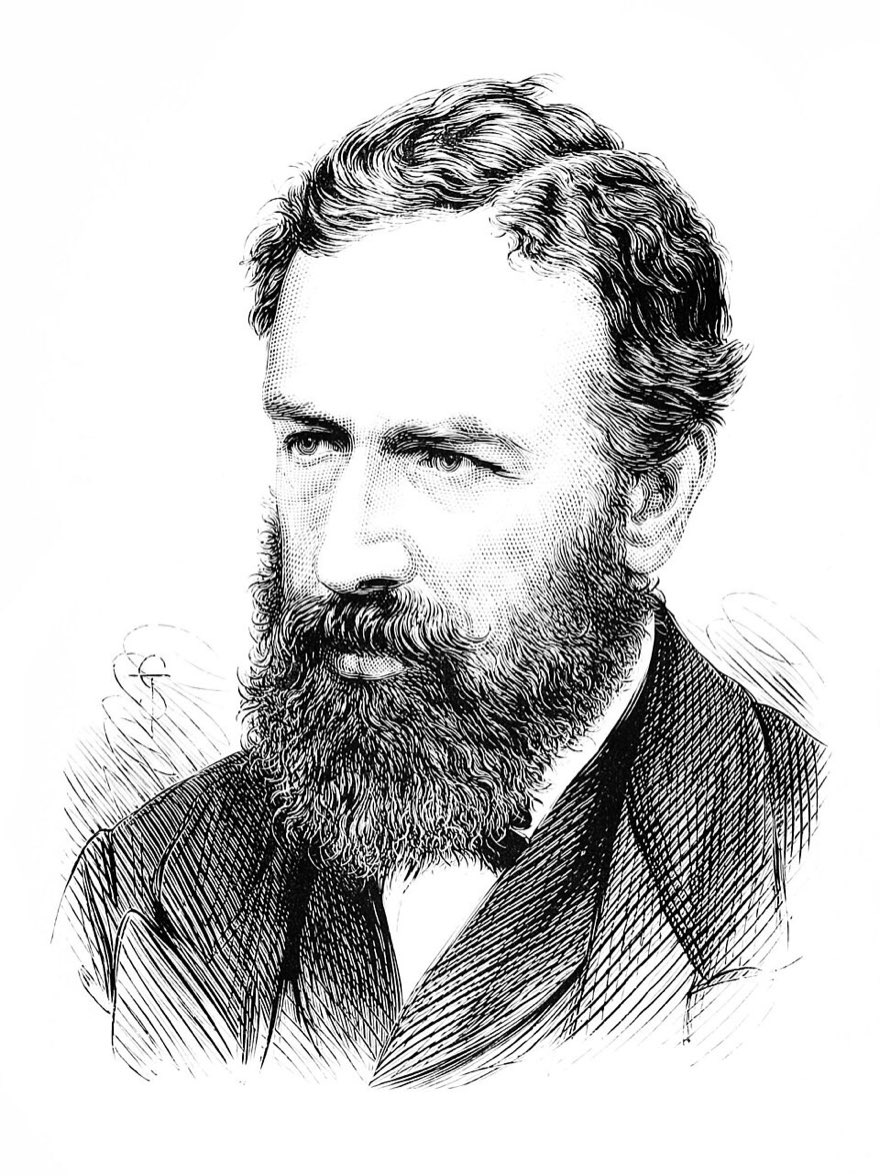
The mechanism is ordinary economics. A more efficient engine makes each unit of work cheaper, and cheaper work finds new buyers. When plenty of valuable uses are waiting, held back only by price, the new demand outgrows the saving. Economists call that elastic demand. The paradox has a limit worth respecting: where nobody wants more of the thing, efficiency arrives as savings and stops there. The commercial question is which of those two worlds a business lives in.
The idea resurfaced in January 2025, when Microsoft’s chief executive invoked Jevons to argue that cheaper AI would mean far more AI consumed. The argument he reached for was 160 years old.
Freight has already lived one Jevons cycle
The freight industry supplied the strongest modern proof itself. In 1956, loading a ton of freight aboard an average break-bulk ship cost $5.83. Loading the Ideal X, Malcom McLean’s first container ship, cost 15.8 cents a ton. By the arithmetic that worries commercial desks, ports and the trades around them should have needed a fraction of the people, and the industry should have shrunk to fit.
What happened is the second half of the Jevons argument. World trade grew about sevenfold in real terms between the early 1960s and 1990. The standard economic study of the container revolution estimates that containerisation raised trade between early adopting industrialised countries by roughly 500% over the 15 years after adoption. Its authors find that effect much larger than the trade agreements of the era. The growth was visible within months of the box arriving on a lane: Japanese seaborne exports rose by half between 1967 and 1969, and Korean exports to the United States trebled between 1969 and 1973.
The cycle was honest about where the work went. Break-bulk dock gangs shrank, and everything around the cheap box grew: ports, carriers, intermodal networks, and the modern forwarding industry, which quotes multi-leg door-to-door shipments at volumes nobody priced freight for in 1956. Forwarding is itself a business built on the abundance side of a Jevons cycle.
Computing made the same promise and grew the profession
In December 1951, IBM took a full page in Fortune to sell the 604 Electronic Calculating Punch, and the copy reads like an AI vendor pitch with better illustration. The machine “speeds through thousands of intricate computations so quickly that on many complex problems it’s like having 150 EXTRA Engineers”. Engineering staff, “now in critical shortage”, would stop losing “priceless creative time at routine repetitive figuring”. It is the same arithmetic this guide opened with, dressed for 1951: the same output from a fraction of the slide-rule men filling the page.

The substitution never happened. When the ad ran, “computer” was still a job title held by a person, and rooms of human computers were doing the figuring at the aerospace laboratories well into the 1960s. Cheap machine calculation cut the price of an answer, and the world ordered more answers than any room of people could have staffed. The machine grew professions of its own around programming, analysis and the systems all that calculation made possible. The 150 extra engineers proved to be one of history’s great underestimates. Each time calculation got cheaper, the world found more things worth calculating.
Current AI evidence points to demand and bottlenecks
The modern evidence is starting to rhyme with the older cases. A 2025 AEA study using French firm-level data found sales and employment rose after AI adoption, suggesting productivity gains let adopting firms grow enough to outweigh displacement. A 2026 European Investment Bank working paper using more than 12,000 EU and US firms found AI adoption raised labour productivity by 4%, with higher worker output as the short-run result. A CEPR summary of a 2026 survey of 734 senior financial executives found the gains most closely tied to demand channels: improving products and services, and reaching or serving customers more effectively.
McKinsey’s private-equity frame is a useful commercial version of the same point. Productivity-only use cases are the first maturity level; the larger value comes when companies embed AI into products, services and new business building. Its 2025 State of AI survey makes the operating lesson more concrete: among 25 organisational attributes tested, workflow redesign had the biggest effect on reported EBIT impact from gen AI, and respondents increasingly reported revenue increases inside the business units using it.
The labour economics also supports the bottleneck shift. A 2026 NBER paper on O-Ring Automation argues that task-by-task substitution logic is incomplete when work is made of complementary tasks. Automating one task changes the return to the rest, and can make the remaining bottleneck tasks more valuable. On a forwarding desk, quote assembly may get cheap first; margin policy, customer selection, supplier confidence and exception review then become the higher-value work.
Most commercial desks ration demand today
The paradox turns on one question: is there demand the desk is turning away today? Any desk can answer that from its own week. Desks ration silently every day. Requests that land overnight wait for the morning shift. A request that lands at 16:40 gets answered tomorrow, after some buyers have already shortlisted. Tenders get triaged by available hours as much as by attractiveness, and the ones that would take a week to answer well get declined in an afternoon. Rate cards go stale between refreshes because a proper refresh costs a week nobody has. Awkward multi-leg requests earn a polite decline, and a quote gets priced from one benchmark because pulling 3 costs another 20 minutes. None of this shows up in a report, because unanswered demand is recorded nowhere. That is why it is so easy to believe the book is already as big as it can get.
The public numbers from the largest players make the rationing visible. DSV frames its opportunity pool at 3 to 3.5 million spot quote requests a year. C.H. Robinson’s newer disclosure is more direct: its CFO says humans could respond to only about 60 to 65% of transactional email quote requests, and the AI quoting agent now touches 100%, with average response time down from 17 to 20 minutes to about 32 seconds. The first listed outcome is revenue growth, because the company now competes for more of the opportunity set. DHL Supply Chain describes the same commercial pattern in RFQ and proposal work: AI cleans and analyses prospect data so engineers and sales teams can produce faster, more accurate, more tailored proposals. Freightos’ 2025 online freight research shows buyer expectations moving in the same direction, with instant quoting now offered by half of top forwarders and four of the five largest ocean carriers.
Cheap capacity moves the constraint to judgement
Treat agents as the desk’s container moment and the planning questions change shape.
Capacity planning inverts. A desk sized to throughput asks how many quotes a person can turn in a day. A desk with effectively unlimited throughput asks how much demand it can profitably attract: which lanes to push, which lapsed customers to win back, which tenders are worth bidding when the marginal bid costs hours, and how many suppliers are worth asking when another rate costs minutes.
Staffing shifts from production to judgement. The hours that went into rekeying, rate hunting and formatting move to the work that was always rationed hardest: the call before the quote, the chased exception, the supplier negotiation, the review of the margins the agents propose.
Service levels become policy. When every request can be answered within the hour it lands, response time stops being a staffing outcome and becomes a commercial choice: which customers get instant answers, which get a call first, and what holds for review.
Judgement becomes the scarce resource. Pricing policy, risk appetite, customer selection and exception handling stop competing with throughput for the same hours. That work is what a desk is for.
The winners are the forwarders who use the abundance
Jevons describes totals, and totals promise nothing to any single firm. Coal consumption multiplied for the operators who put engines to work. Trade after 1966 grew first and fastest for the early containerisers, and those early movers are exactly the group the 500% estimate measures. The rewards go to the firms that reorganise around the new cheap capacity while that still sets them apart from the market.
That’s why our homepage asks what would you do with unlimited resources? Every honest answer is a growth answer: quote every request the hour it lands, bid every tender worth winning, refresh every rate card worth defending, win back the customers who stopped asking. Nobody answers with the same book on fewer people.
The evidence of 1865, 1951, 1966 and current AI adoption says the same thing about 2026: efficiency does its real work as growth.
For the public record on what deployed AI quoting looks like at the largest forwarders, see build or buy AI quoting: what the giants show.
Common questions
What is the Jevons paradox?
An observation from William Stanley Jevons's 1865 study of British coal: when using a resource gets more efficient, total consumption of the resource tends to rise, because cheaper use opens up work that was never worth it before. It holds wherever more demand is waiting, held back only by price. Economists call that elastic demand.
Has freight seen a Jevons cycle before?
Yes. Containerisation cut the cost of loading a ship from $5.83 a ton in 1956 to 15.8 cents a ton, and trade multiplied: the standard economic study estimates containerisation raised trade between early adopting industrialised countries by roughly 500% over 15 years, a larger effect than the era's trade agreements. The modern forwarding industry grew up inside that abundance.
Has the same pattern appeared outside freight and history?
Yes. IBM's December 1951 advertisement in Fortune sold its electronic calculator as 150 extra engineers freed from routine figuring. Once calculation was cheap, demand for it grew beyond anything rooms of people could staff. Current AI evidence points the same way: AEA researchers found sales and employment rose after AI adoption in French firm data, while CEPR reports AI productivity gains in US firms are tied to improving products and serving customers more effectively.
Does the paradox apply to every forwarding desk?
No. Where demand is genuinely fixed, efficiency arrives as cost savings and stops there. Most desks show the signature of rationed demand: late answers, unbid tenders, declined awkward requests, stale rate cards, and quotes priced from a single benchmark. Rationing is the mark of demand held back by capacity, and that is the case where efficiency grows the book.
What should a desk measure to plan for cheap commercial capacity?
Measure the rationing first: requests answered late or never, tenders passed on for lack of hours, quotes priced from one benchmark, and customers who stopped asking. That is the latent book. Then plan people around the work that stays scarce: pricing policy, exception handling, review, and the customer and supplier relationships the freed hours can fund.
Sources
These public sources support the factual claims and product descriptions above. Evidence last reviewed 16 July 2026.
- W. Stanley Jevons, The Coal Question (1865), Online Library of Liberty edition
- Yale Energy History: W. Stanley Jevons, The Coal Question (1865)
- Portrait of W. Stanley Jevons, Popular Science Monthly, 1877 (public domain, via Wikimedia Commons)
- NPR Planet Money, February 2025: why the AI world is suddenly obsessed with Jevons paradox
- McKinsey: Beyond productivity, how AI creates value in private equity
- McKinsey Global Survey, The state of AI: How organizations are rewiring to capture value, March 2025
- NBER Working Paper 34639: O-Ring Automation, January 2026
- Aghion, Bunel, Jaravel, Mikaelsen, Roulet and Sogaard: How Different Uses of AI Shape Labor Demand, AEA Papers and Proceedings 2025
- EIB Working Paper 2026/02: AI adoption, productivity and employment, evidence from European firms
- CEPR VoxEU: AI, productivity, and work, evidence from US firms
- IBM 604 advertisement, 150 Extra Engineers, Fortune, December 1951 (public domain scan, via Wikimedia Commons)
- NASA Jet Propulsion Laboratory history: When Computers Were Human
- Marc Levinson, The Box That Shrank the World, Works That Work magazine
- Marc Levinson, The Box: How the Shipping Container Made the World Smaller and the World Economy Bigger, Princeton University Press
- Bernhofen, El-Sahli and Kneller: Estimating the effects of the container revolution on world trade, Journal of International Economics 98 (2016)
- Bernhofen, El-Sahli and Kneller: working paper version, February 2014 (open access PDF)
- DSV: Capital Markets Day 2026 materials (12 May 2026)
- C.H. Robinson news, June 2025: AI fleet surpasses 30 agents
- C.H. Robinson: Benefits of AI Go Way Beyond Productivity
- DHL Supply Chain: Generative AI for data management, customer support and proposal accuracy
- Freightos: The State of Online Freight 2025

