
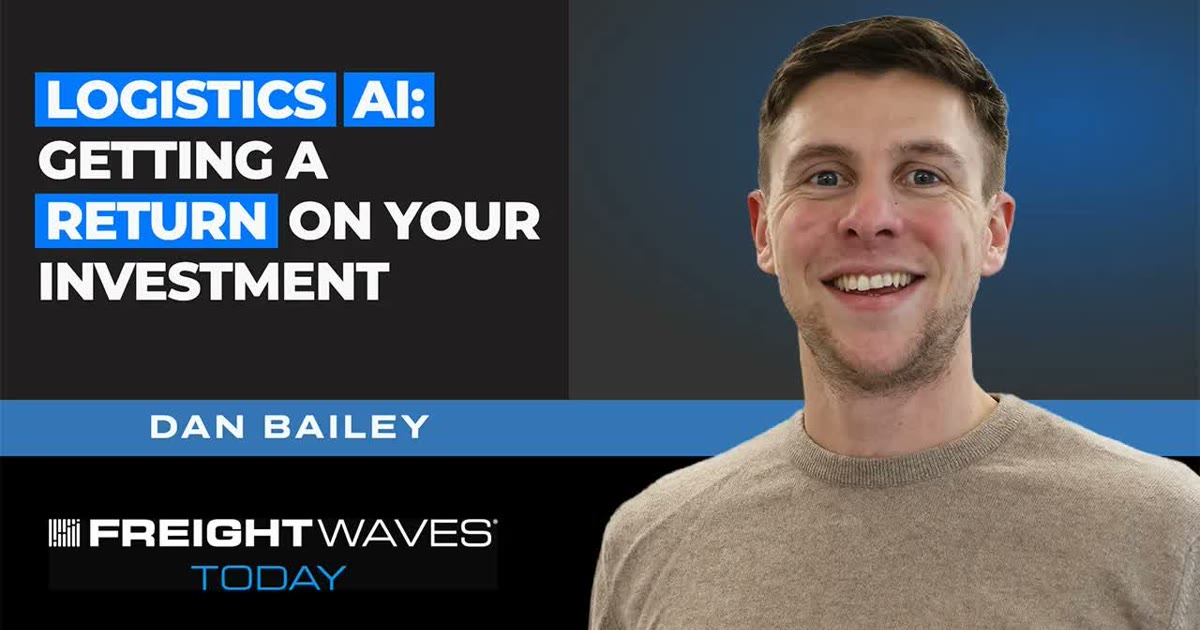
On 9 October 2026, Nexcade co-founder and CEO Dan Bailey joined FreightWaves Today from London. The conversation started with C.H. Robinson’s plan to acquire RXO. It then moved to the question many forwarders and brokers are asking: how do you get a return on AI?
Watch the full interview on FreightWaves (17 minutes).
Context is the hardest part (2:24)
Context, Dan said, “is the biggest challenge in our space.” Freight businesses run on years of experience and market knowledge, and much of it is never written down. An AI project has to capture that knowledge as well as the workflow.
He applied the same point to C.H. Robinson and RXO. A lean operating model that works in one company still has to absorb another company’s customers, processes and operational knowledge. He sees that as the main risk in delivering the $300 million synergy target.
US teams often go first (4:28)
Nexcade’s US customers have adopted AI faster than expected. Many European customers also test new projects with their US teams first. Dan put this down to the size of the US market and a culture that is willing to experiment.
Start now, and start small (6:10)
“The biggest blocker to starting is just starting,” Dan said. Employees are probably already using tools such as ChatGPT or Claude, whether or not their company has adopted AI.
He recommends two tracks at the same time:
- leaders choose the strategic workflows and build the data foundations
- managers and teams who want to try AI run small pilots
The pilots give a company three or four chances to learn before its largest projects reach rollout.
Measure revenue and risk (8:02)
Dan suggested keeping budgets for experiments separate from budgets for production work. Beyond time saved, he measures returns in two areas:
- risk: fewer fines, less detention and demurrage, fewer unexpected charges and fewer data entry errors
- revenue: faster quotes, better pricing, higher win rates and stronger margins
Some risk reduction is hard to measure at first, he said, but it adds up over 12 to 18 months.
What Nexcade’s agents do (11:29)
At least 90% of the quote requests Nexcade sees still arrive by email. About 75% of its customers’ volume is air and ocean freight. The other 25% is road freight in the US and Europe.
Nexcade’s agents read the inbox, identify quote requests and extract the shipment details. Each customer chooses how much to automate. The agents can check contracts and spot rates, email overseas agents and collect rates from portals. Operators make the pricing decision.
Dan said the aim is for operators to start each day with 10 to 15 quotes ready to price. He said teams working with Nexcade have doubled the number of quotes each person handles a day. One customer receives requests from overseas agents at 3am or 4am. Those requests now get an answer straight away, before the customer’s competitors are up.
People still matter (14:32)
Before Nexcade, Dan helped grow Sedna from 20 customers to more than 250. Sedna replaced Outlook for large shipping and logistics companies, and change management was one of the hardest parts. He said it matters just as much with AI.
“The goal with AI is to free them up to do all sorts of new work, to build deeper relationships, to think more strategically,” he said.
Sources
These public sources support the factual claims and product descriptions above. Evidence last reviewed 12 October 2026.